
'The border deal offers a hedge for India against Trump's unpredictability when it comes to his approach to competition with China.'

China, however, remained ambiguous about the status of its own troops.

Army chief General Naravane said the ongoing dialogue will sort out all the perceived differences between the two countries.

India, China and Russia on Thursday held a trilateral meeting on Afghanistan's security situation against the backdrop of the US' plans to withdraw its troops from the war-ravaged country, raising fears of re-emergence of Taliban and al-Qaeda linked elements.
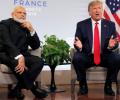
Trump on Wednesday said in a tweet that he was "ready, willing and able to mediate" between the two countries.
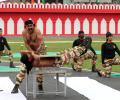
The 62nd Raising Day of the Indo-Tibetan Border Police Force was commemorated with great enthusiasm at the Seema Dwar in Dehradun.

As soon as the Question Hour ended, Congress' Leader of the House Adhir Ranjan Chowdhury demanded that a discussion on the 'Indo-China border situation be held', saying late Prime Minister Pandit Jawaharlal Nehru had allowed a discussion in Lok Sabha on the India-China war in 1962.

Israel and the United States had a plan. Iran punched back. And now the Gulf is reeling, the world is beginning to feel the pain and, as on date, no one in Washington or Tel Aviv appears willing to admit that the punch has landed, notes Prem Panicker, continuing his must-read blog on the war in the Middle East.

'Without ground troops the US will not be able to oust the Iranian Islamic regime. Political change does not happen just by using bombs or planes.'
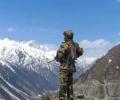
Multiple rounds of talks have failed to yield any significant result in defusing border tensions. The last round of Corps Commander-level talks between both countries were held on November 6, 2020 in Chushul in Eastern Ladakh.
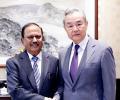
Wang is travelling to India days ahead of Prime Minister Narendra Modi's planned trip to the Chinese city of Tianjin to attend the annual summit of the Shanghai Cooperation Organisation.
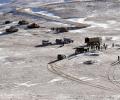
The development comes after after reaching a consensus in the 16th round of military talks, the two sides said in a joint statement this evening.
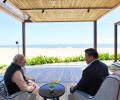
'India's relationship with China has been and will continue to be complex, delicate and sensitive,' says Rup Narayan Das.
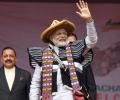
New Delhi's reaction came in response to Beijing announcing Chinese names for 11 more places in Arunachal Pradesh which the neighbouring country claims as southern part Tibet.
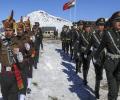
China and India were able to "reduce differences" and build "some consensus" on disengaging troops from friction points to end the standoff in eastern Ladakh and agreed to maintain dialogue to reach a resolution acceptable to both sides at an "early date", the Chinese defence ministry said on Thursday.
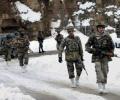
China has alleged that the Indian troops twice crossed the border line on June 15 for "illegal activities and provoked and attacked Chinese personnel" which led to serious physical conflict between the two sides, hours after the Indian Army said the violent face-off took place between the troops during the "de-escalation process" in the Galwan Valley.

India and China have implemented a pact on patrolling in Depsang and Demchok along the Line of Actual Control (LAC) in eastern Ladakh, as per agreed modalities and timelines. The agreement was reached on October 21 and includes provisions for disengagement and patrolling in the last two friction points in the region. The pact has been effected and implemented as agreed, with both sides resuming patrolling activities and grazing, where applicable, as per longstanding practice before the friction began. The terms of the disengagement agreements reached prior to the latest pact continue to hold in relevant areas in eastern Ladakh. The agreement applies mutually to both sides and is without prejudice to India's positions on the LAC or boundary lines. India and China are each carrying out one round of patrolling in Depsang and Demchok, but they have maintained their deployment of troops along the LAC. The focus now is on de-escalation of the overall situation. The agreement was endorsed by Prime Minister Narendra Modi and Chinese President Xi Jinping in a meeting in Kazan, Russia, signaling attempts to normalize ties.
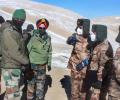
Indian Army Chief General M M Naravane had said on Wednesday that India was hopeful of resolving issues related to disengagement at Patrolling Point 15 (Hot Springs) in eastern Ladakh in the 14th round of talks.

External Affairs Minister Pranab Mukherjee arrived in the southern Chinese city of Guangzhou on Wednesday, kick-starting his four-day visit to China, during which the boundary row and irritants surrounding it are expected to dominate his talks with the leadership in Beijing.

Former Niti Aayog Vice Chairman Arvind Panagariya has opined that cutting trade with Beijing at this juncture would amount to sacrificing India's potential economic growth.
Jaishankar's talks with Yang and later in the Strategic Dialogue were expected to cover the key India-China differences like China blocking India's bid to join the NSG and UN ban on Azhar.

We very much hope that wisdom dawns on the Chinese side, Jaishankar said in Bangkok.

The Galwan clashes indicate to the limitations in relations if they do not address border stability, points out Srikanth Kondapalli.
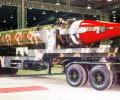
The US intelligence assessment highlights Pakistan's near-certain procurement of weapons of mass destruction-applicable goods from foreign suppliers, primarily through Chinese support.
The Galwan clashes indicate to the limitations in relations if they do not address border stability, points out Srikanth Kondapalli.

'China will do everything to hamper our ability to be a competitor.' 'China wants every country in the region to be subservient and we are the biggest stumbling block.'

Chinese mobile manufacturer Vivo will return to sponsor the IPL this season after its attempts to transfer the rights to another company failed to materialise as offers were not upto its "expectations".

What we are watching is something different: A fog manufactured and maintained by the people who started the war, so that the question of why it was started never has to be answered, observes Prem Panicker in his must read blog on the war in the Middle East.
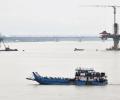
India has expressed concerns over China's plan to build a mega dam on the Brahmaputra River in Tibet, stating that it will continue to monitor and take necessary measures to protect its interests. New Delhi has urged Beijing to ensure that the interests of downstream states are not harmed by activities in upstream areas. The dam, estimated to cost USD 137 billion, has raised apprehensions about its impact on the ecological balance of Arunachal Pradesh and Assam, through which the Brahmaputra flows. India has repeatedly expressed its concerns to China through diplomatic channels, highlighting the need for transparency and consultation with downstream countries.

"I am saddened, however, that there is a small, handful of members that seem to be still tolerating the war," Sergiy Kyslytsya said after the Security Council voted on the United States-led draft resolution.

"After the tri-junction in Doklam in the Sikkim sector, this is the most important tri-junction along the Sino-India border."
India has a 'fundamentally healthy' relationship with China that goes beyond the boundary issue, Minister of State for External Affairs Shashi Tharoor stated on Tuesday."The relationship should not be seen only in the context of the problems, it should also be seen in the context of the opportunity," he said when asked about the India-China border talks last week. Tharoor said, "We are very pleased to say that, by and large, the relationship remains healthy."
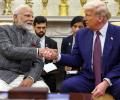
A US lawmaker and former officials warn that President Trump's policies are damaging the strategic partnership between the United States and India, potentially driving India closer to China and Russia.

Against the backdrop of recent Chinese incursion in Ladakh External Affairs Minister Salman Khurshid Saturday said the two countries are working on a new Border Defence Cooperation Agreement.
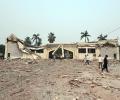
'Every decision India makes along the LoC, it must also consider implications along the LAC.'
"The meeting thus did not result in resolution of the remaining areas," the Army said in a statement.
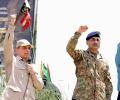
'If the Trump administration could gain access to the nuclear weapons, they would be satisfied -- at least they could control them.'
China wants a code of conduct for troops on the India-China border areas. While the Indian side has reacted cautiously, it is not clear what effective additional protocols that the current proposed code will bring forth to usher stability in the border areas, says Srikanth Kondapalli.

During the talks, India and the US decided to take a big leap in broad-basing their strategic ties in several critical areas.

Chinese media on Wednesday criticised the western media for attempting to drive a "wedge" between India and China.
